
An Examination of
How Self Perception Evolved
And Why We Are in an Identity Aesthetic Revolution
Matching Sets Were Once Luxury
Human self-perception evolves in parallel with technological, social, and economic conditions — and the current “aesthetic identity revolution” is not vanity or regression, but the natural outcome of a long arc from inherited identity to self-authored identity.
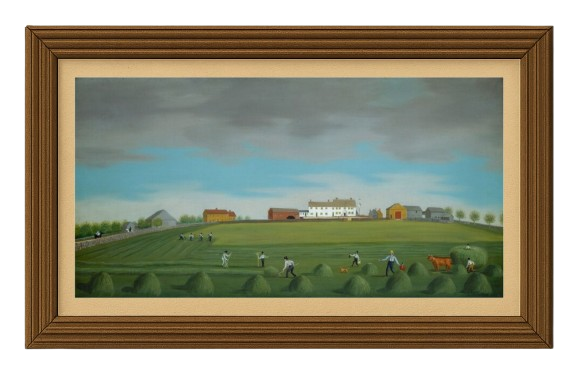
Inherited Identity: Who You Were Allowed to Be
For most of human history, identity was inherited rather than chosen.
Who you were — your labor, your status, your gendered expectations, and aesthetic presence — was determined at birth and reinforced by necessity. Survival left little room for experimentation. Representation was not a personal project; it was a social function.
This is not to say that humans lacked self-awareness or individuality. But identity operated within rigid boundaries. One did not curate oneself; one fulfilled a role.
In this way, early identity mirrors early human development. A child does not initially choose who they are — they are named, dressed, spoken for, and shaped by the world around them. Identity precedes agency.
For most of history, humanity remained in this stage.

Reflection and the Mirror: The Birth of the Self as Object
One of the earliest developmental moments of self-recognition is the mirror — the realization that I exist as something observable.
Historically, this moment was rare.
Mirrors were expensive, imperfect, and inaccessible to the majority. To see oneself clearly, regularly, and privately was a privilege. Yet even before mirrors were widespread, humans found ways to externalize the self through adornment, ritual, and performance.
This is where performative identity enters the story — not as deception, but as translation.
Dress, posture, grooming, and ceremony allowed individuals to project meaning onto the body. However, the freedom to do so correlated strongly with class. Those consumed by survival had fewer resources for aesthetic play, while leisure classes — largely insulated from daily precarity — refined self-presentation into an art form.
This divide matters. It is here that early beauty standards were shaped — not by universality, but by access.
Portraiture: Being Seen as Art
Portraiture marked a critical shift in self-perception: the human could be captured.
To be rendered in paint or sculpture was to be validated as worthy of preservation. Portraits did not merely document appearance; they constructed legacy, authority, and idealized identity.
And again, access was selective.
To be translated into art required wealth, status, or proximity to power. The aesthetics recorded in history — faces, bodies, postures, attire — were not representative of humanity as a whole, but of those deemed significant enough to be seen.
In this way, portraiture did not just reflect identity; it codified it.

Photography: The Shock of Reality
The invention of the camera introduced something unprecedented: the ability to capture a real moment, mechanically and with apparent objectivity.
This altered self-perception profoundly.
For the first time, humans encountered themselves not as symbols or ideals, but as they appeared. Photography forced a reconciliation between internal identity and external reality — a process we now undergo from childhood, seeing ourselves in family albums long before we fully understand what we are looking at.
Initially, photography documented existence. The subject was rarely the operator. Images recorded life as it happened.
But as photography intersected with advertising, cinema, and mass media, a shift occurred: people began to notice how they looked — and how they could look better.
The image became aspirational.
Film, Celebrity, and Intentional Persona
Film accelerated this evolution.
The rise of cinema and celebrity culture introduced intentionally constructed personas at scale. These figures did not merely exist — they performed identity. Glamour, narrative, and repetition created templates of selfhood that were no longer inherited, but emulated.
Crucially, these identities felt attainable.
Unlike aristocratic portraiture, celebrities appeared to rise through talent, charisma, or luck. They became mirrors of possibility rather than reminders of fixed hierarchy. Identity was no longer only something you were born into — it was something you might become.
This marked a turning point: identity shifted from destiny to aspiration.
The Subject Becomes the Operator
Digital cameras — and later smartphones — collapsed the remaining distance.
The subject became the operator.
No longer limited to occasional documentation, individuals could now curate memory, perspective, and narrative continuously. Moments were lived with the knowledge that they might be recorded. Memory itself became editable.
This did not create performativity — it amplified it.
With mass access came saturation. As more people gained the ability to construct visible identities, competition emerged. Aesthetic selfhood became not only expressive, but comparative. Visibility turned into an economy.
And this is where we now find ourselves.
The most frequent accusation is narcissism — that modern identity construction centers the self excessively, prioritizing image over contribution.
However, narcissism is not defined by visibility, but by lack of self-awareness.
Throughout history, individuals with the greatest control over their image — monarchs, aristocrats, religious figures — were not accused of narcissism; their self-presentation was framed as authority, divinity, or legitimacy. What has changed is not the presence of image-crafting, but who is allowed to participate in it.
The democratization of self-representation has exposed a process that was once reserved for the elite. When everyone gains access to authorship, the act itself becomes visible — and therefore suspect.
What we are seeing is not an increase in ego, but an increase in agency.
Another criticism holds that curated identity is inherently false — that performance distances individuals from their “true self.”
This argument assumes that authenticity exists prior to expression.
Psychologically, this is incorrect.
Identity is not uncovered; it is formed. Humans learn who they are through experimentation, feedback, mirroring, and adjustment. Performance is not the enemy of authenticity — it is often the mechanism through which authenticity emerges.
The problem arises not when people perform, but when performance becomes detached from reflection. When identity is adopted purely for social reward rather than internal coherence, dissonance occurs.
In other words:
The issue is not performativity — it is unconscious performativity.

A room where every piece is the same wood tone is the equivalent of wearing a shirt, pants, jacket, shoes, and bag all in the exact same fabric. It reads as one block. No depth, no contrast, no story.
Enjoy? this
Written and Designed to a T
Share this article!
link link link
Related Articles:
blah blah blah
<!-- Interactive Mood Board Ghost - Image Canvas -->
<div data-ghost data-ghost-plugin-name="mood-board" data-blog-href="/blog-1"></div>
<!-- Mood Board by Ghost -->